7 Greenwashing Examples in Fashion
Greenwashing is when a company claims to be sustainable, but actually isn’t. It’s unfortunately extremely common, especially as two-thirds of consumers say they’d pay more for sustainable products.
As a sustainable fashion educator, I want more consumers to be able to identify greenwashing, so here are 7 examples of common greenwashing tactics I’ve encountered.
Common Greenwashing Tactics
1. Having a “sustainable” line (H&M)
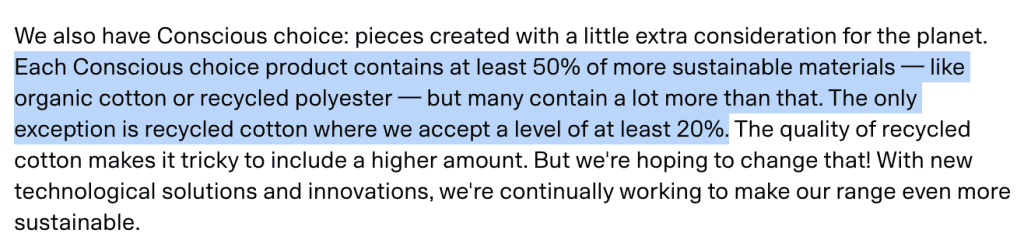
Many fast fashion brands will have a “sustainable” line where they use more natural or recycled materials. The standards for these lines vary; for example, for an item to qualify as part of H&M Conscious, it must ” [contain] at least 50% of more sustainable materials — like organic cotton or recycled polyester….The only exception is recycled cotton where we accept a level of at least 20%.”
Just because a line uses lower-impact materials doesn’t mean it was produced by workers paid a fair wage, or in safe conditions. Also, it doesn’t negate H&M’s overproduction.
2. Framing factory audits as an ethical certification (Quince)
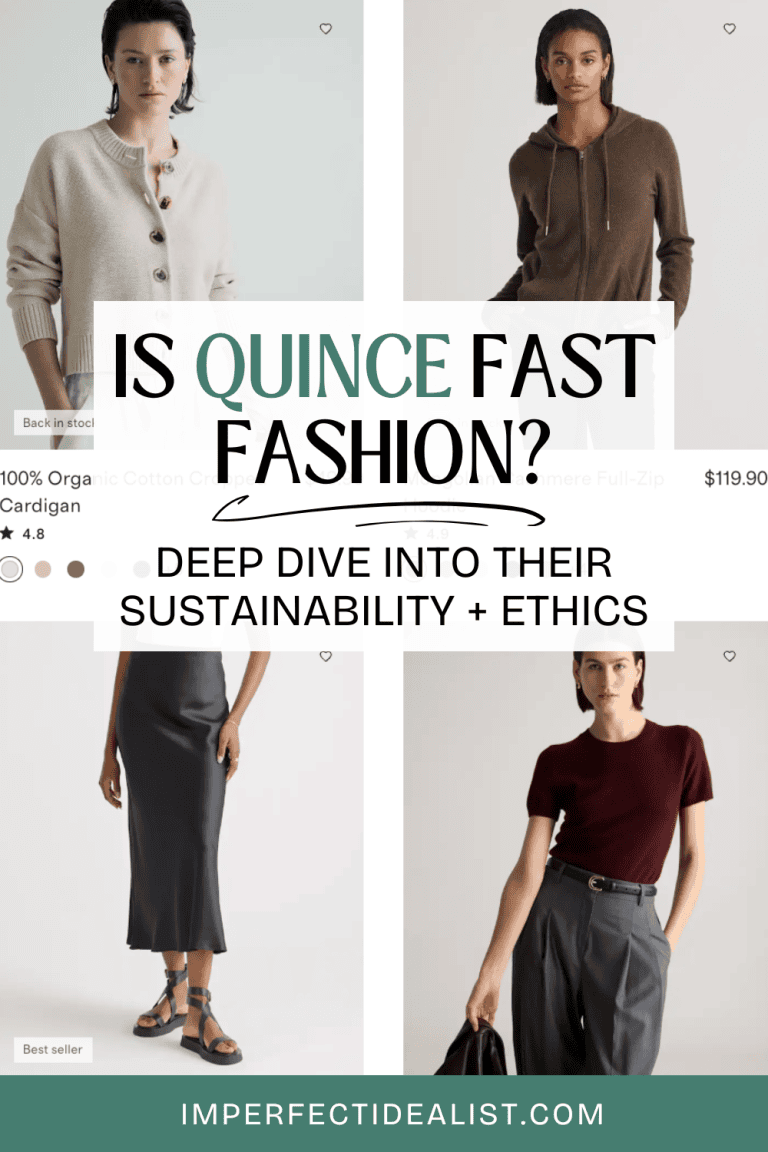
It’s important for brands to audit their factories, but many brands stop there and don’t share the results of the audits. Or, they’ll even try to frame the audits as an ethical certification. I’ve seen this at least twice, especially with BSCI (Business Social Compliance Initiative).
Quince, for example, says products are produced in BSCI Certified factories, making it seem like their factories are ethical. However, BSCI is not a certification; they themselves say so on their website. It is simply a framework for auditing factories and improving business practices.

3. Making vague statements and promises (SHEIN)
SHEIN is very clearly a fast fashion brand with well-documented human rights abuses and synthetic clothing full of toxic chemicals.
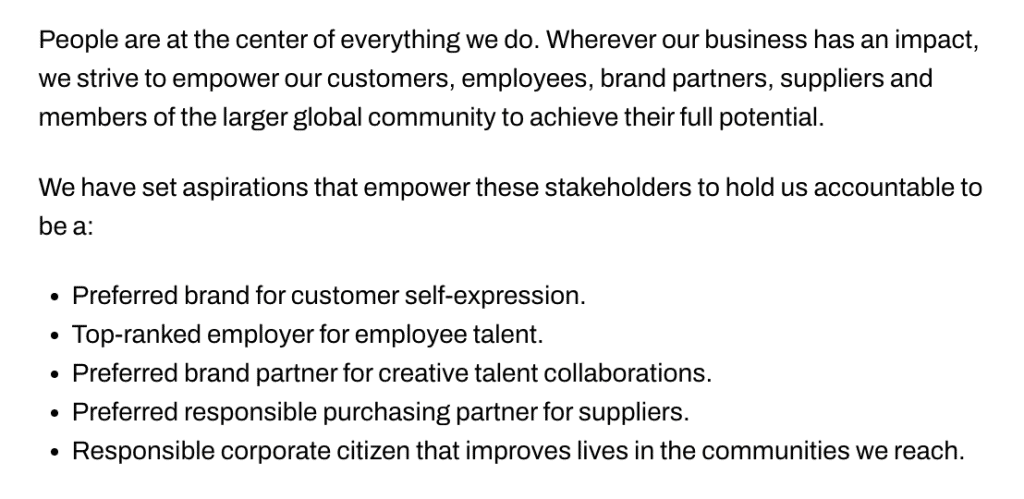
They still have the audacity to make hand-wavy claims like this: “People are at the center of everything we do. Wherever our business has an impact, we strive to empower our customers, employees, brand partners, suppliers and members of the larger global community to achieve their full potential.”
Nice-sounding statements need to be backed up with real action and evidence, and there’s plenty to suggest the contrary at SHEIN.
4. Paying for sketchy certifications (Princess Polly)
While 3rd-party certifications can have value, not all of them are credible. One example is the Sustainable Apparel Coalition, which has members like Amazon and Nike.
Another is B Corp after they recently certified Princess Polly. Princess Polly is a fast fashion brand; it literally says on their site that they’re:
The ultimate global fashion destination for trendsetters who want the latest Insta-ready, TikTok-approved, celeb-worthy looks and they want them now. With daily drops of fresh styles, seriously fast free delivery and easy peasy returns, this weekend’s ‘fit is right here.

Despite this, they’re somehow a B Corp. B Corp is a certification for social responsibility, and it used to be well-respected. However, they have an incentive to accept more companies because brands have to pay to maintain their certification.
Since B Corp has started accepting fast fashion brands and MLMs, it’s discredited the certification quite a bit.
You can still look at B Corp scores to understand how advanced the brand is in its initiatives though, and see that Princess Polly scores 87, which is barely above the qualification standard of 80. On the flip side, Patagonia has 166, Kotn has 103, tentree has 136, and Cotopaxi has a 126, which are all brands I consider more sustainable.
Basically, don’t accept certifications at face value and always dig deeper.
5. Aligning with sustainable aesthetics (Free People)
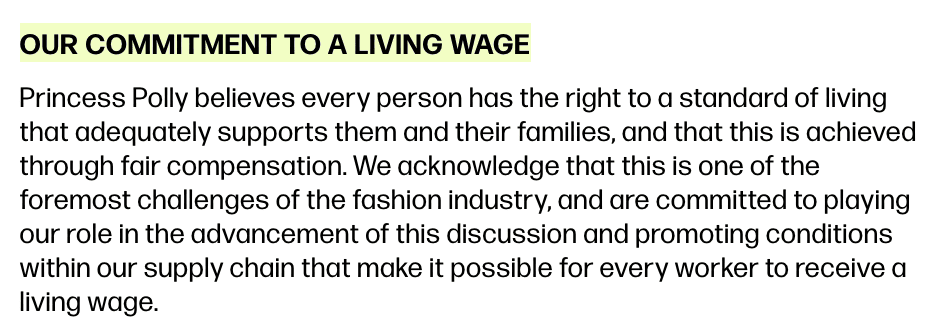
Free People is known for their bohemian, carefree styles. You might think they’re sustainable because their clothing looks earthy. Similarly, Princess Polly has partnered with vegan influencers and creators who like to thrift. This gives them a “green halo effect.”
Unfortunately, Free People is owned by URBN, which also owns Urban Outfitters and Anthropolgie, all of which are fast fashion brands. Free People also uses quite a bit of virgin synthetics and and only has vague statements about paying a living wage.
6. Using recycled synthetics (Target)
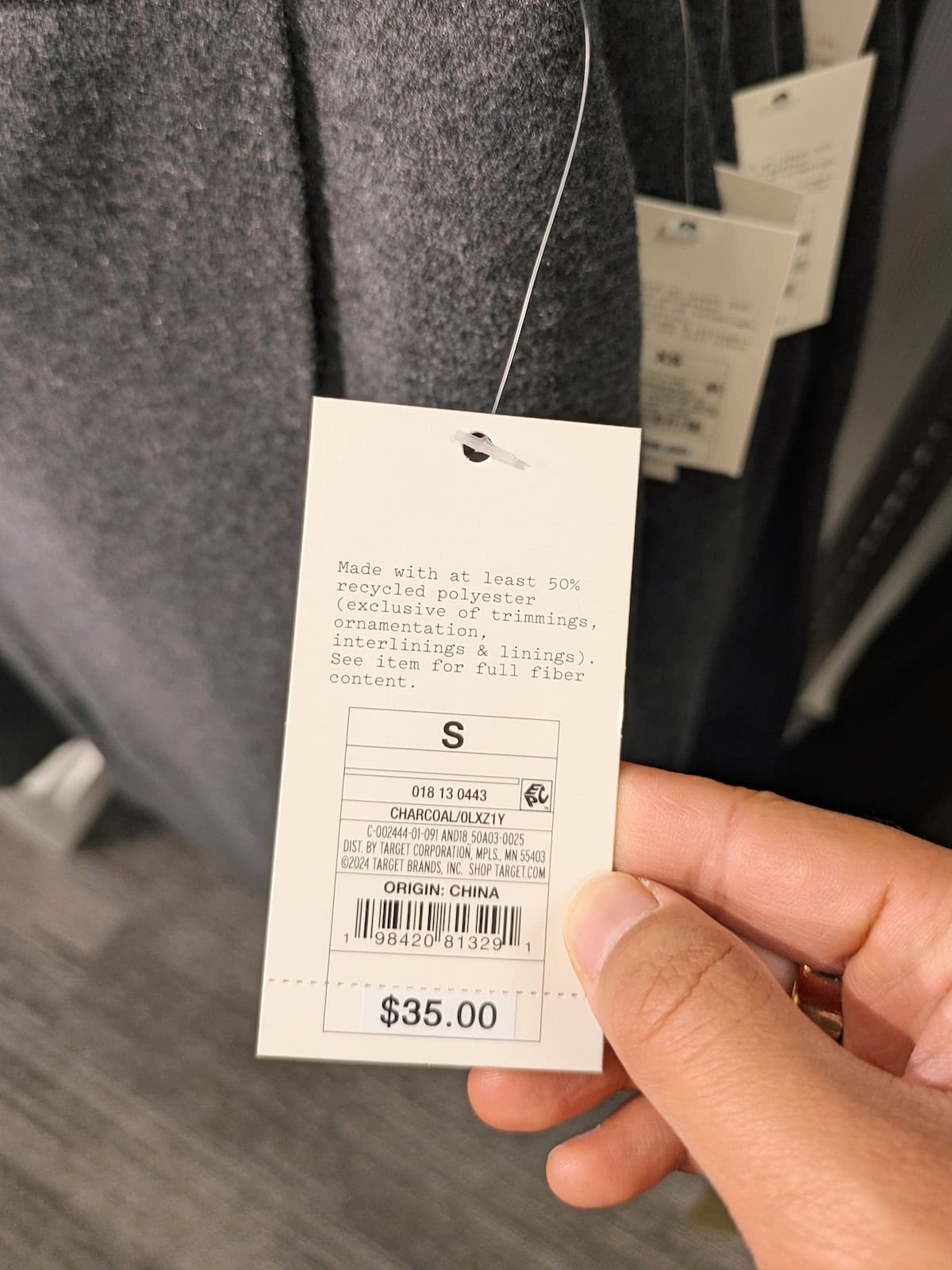
Recycled polyester is all the rage now, to the point where Target now lists the percentage of recycled materials on its hang tags. Most of its clothing now uses a portion of recycled polyester.
Recycled polyester, rPET, is very controversial as it actually takes plastic bottles out of a cycle where they can be infinitely recycled. Once it’s turned into fiber for clothing, it’s much less easily recycled again. Recent studies also have shown that recycled synthetics shed more microplastics.
Regardless, all synthetics shed microplastics, so the ultimate goal should be to make clothing from natural fibers, especially non-athletic gear where synthetics are used for performance reasons.
7. Having a “recycling” program (Madewell + H&M)
Recycling programs aren’t inherently bad, but they’re oftentimes implemented to encourage more consumption. Why else would they be located in-store, where you get a discount to buy new?
Some of them are also scams, such as H&M’s. Swedish journalists dropped off 10 items of clothing with tracking and most items ended up in secondhand markets in the Global South (where most of our used clothing is dumped), some were ground into scraps, and the remaining got lost at sea. The clothing wasn’t actually getting recycled into new clothes—it was getting shipped to other people to deal with.
Madewell’s jeans recycling program actually does seem to do something with the clothing (it turns them into housing insulation), but keep in mind this is downcycling, not recycling. Once the clothing is turned into insulation, it will not be recycled again.
How to Avoid Greenwashing
1. Avoid major fashion brands.
Unfortunately, most major businesses are greenwashing. Chances are, if you can buy it at a mall, it’s fast fashion (with the exception of brands like Patagonia and Allbirds).
Most of the clothing I personally buy are from brands the average person has never heard of (see my sustainable brand guide). Assuming they’re not dropshippers, small business are more likely to actually know their suppliers.
2. Check sustainable brand directories.
Before I do a deeper dive, I first look up brands on ethical brand directories such as Good On You. They rate companies for their impact on people, the planet, and animals. If they’re poorly or highly rated, it’s an decision for me. If they’re in the middle, that’s where I do some deeper research.
3. Look for meaningful measures on brand websites and social media.
I always look at fashion brands’ social responsibility and sustainability pages. I see if they mention:
- Use natural, organic, or recycled materials in the majority of their products
- Share information about their supply chain and how they ensure safe conditions + a living wage
- Reduce fabric and water waste
- Reinvest in local communities
- Care about relevant social causes
- Provide guides on clothing care
For more info, I have an in-depth guide to how I evaluate brands to avoid greenwashing.