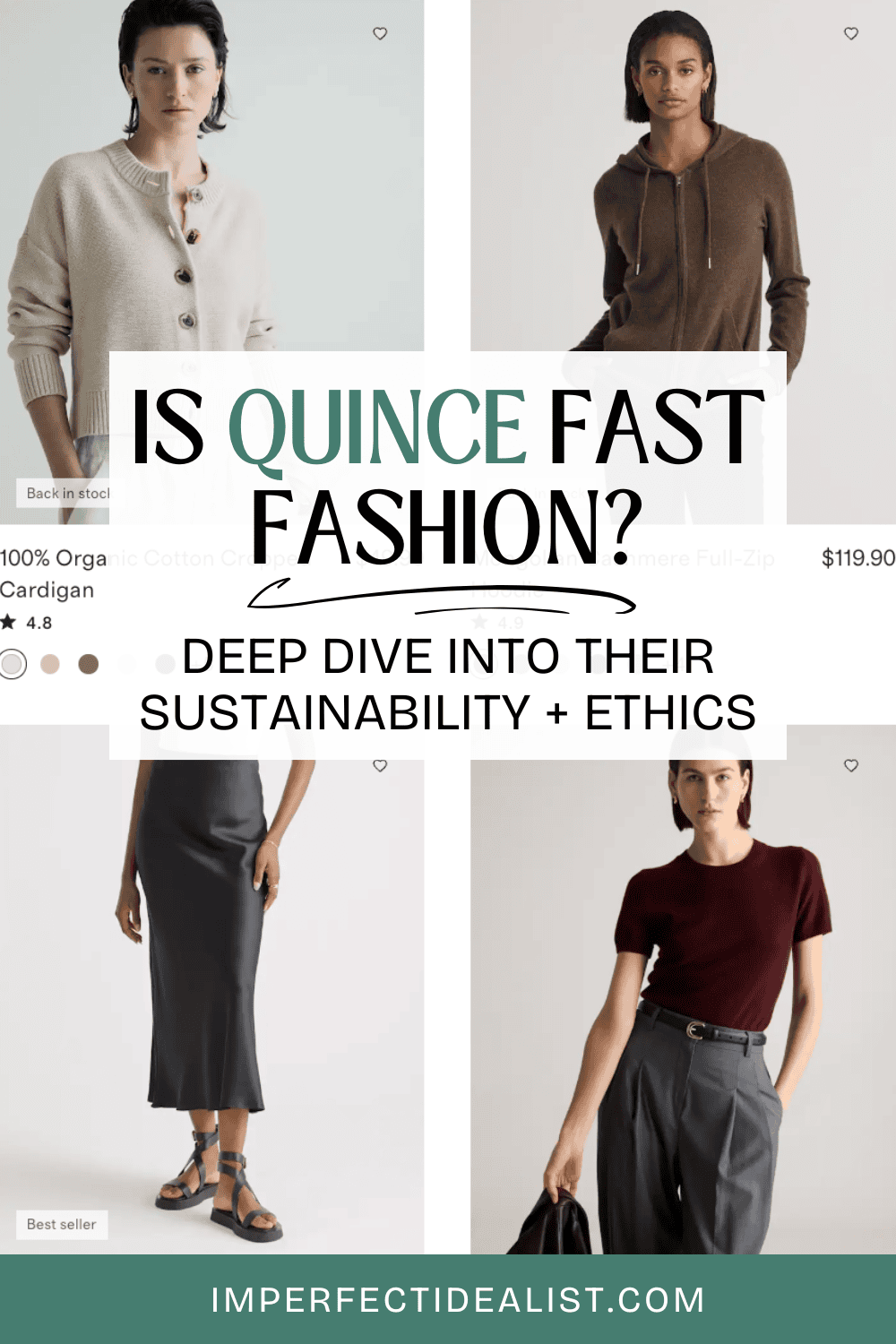
Is Quince Fast Fashion? Evaluating their Sustainability + Ethics
Quince was founded in 2018 and quickly became an internet darling, garnering 1 million instagram followers and a 4.5 billion valuation. They sell “affordable luxury,” with their instagram bio being “inexpensive expensive things, accessible to all.”
As a sustainable fashion educator, I’ve been skeptical of Quince for a long time, due to their broad claims and low prices. In this post, I’m taking a deep dive into their sustainability measures and letting you know how they stand.
Is Quince ethical or sustainable?
Materials
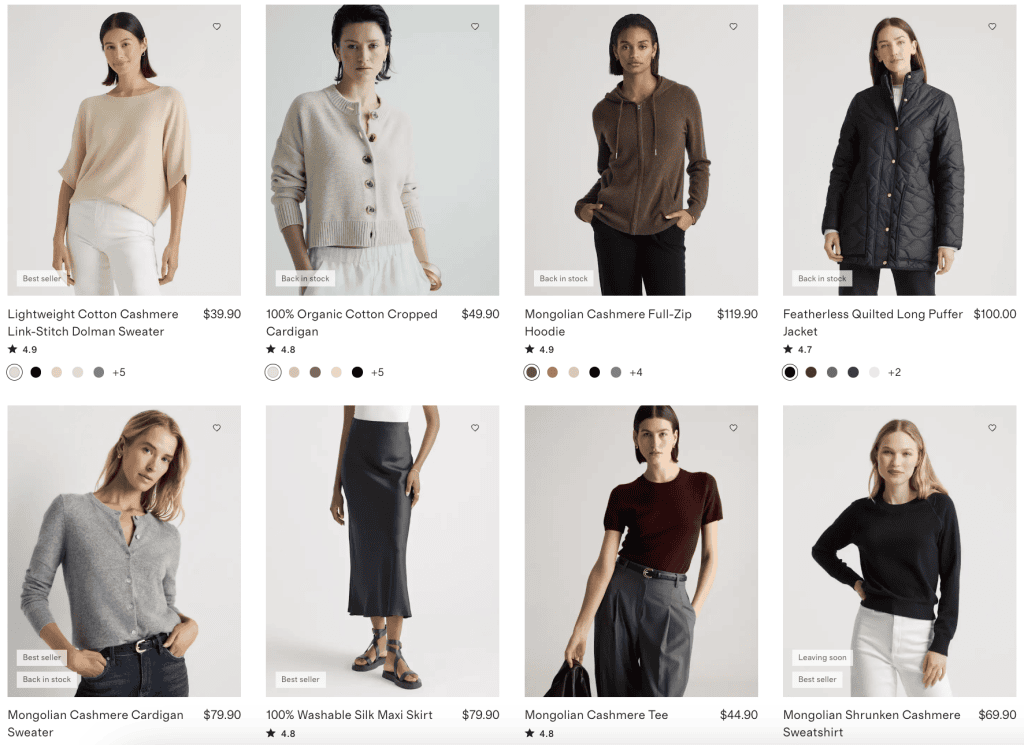
Quince actually does use many more sustainable materials, including organic cotton and linen. It also uses natural animal-based materials like cashmere and alpaca wool (in fact, it’s probably best-known for its cashmere). The majority of their bestsellers are made with these textiles.
It would be helpful, however, to see them quantify the overall percentage of their natural or recycled materials. On their website, they simply state:
“Whenever possible, we use eco-friendly dyes and materials including cashmere, alpaca wool, organic cotton, organic linen and 100% recycled polyester.”
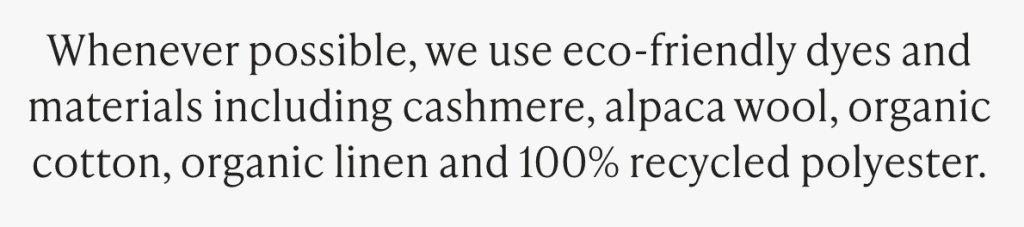
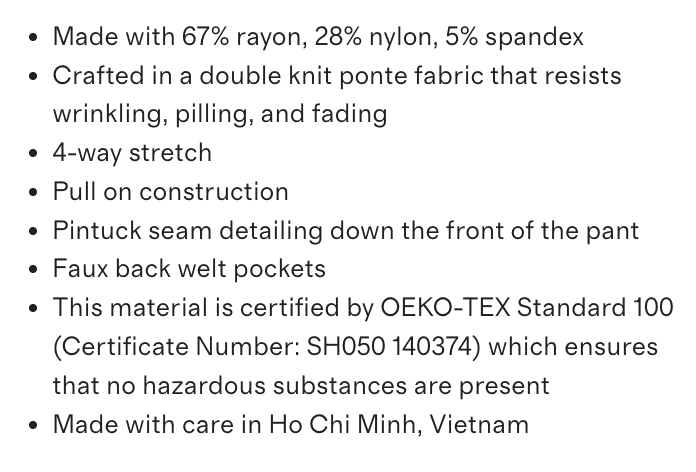
“Whenever possible” is vague and makes it hard to understand material usage overall, as they still do use unsustainable textiles such as rayon, virgin nylon, and virgin polyester.
Animal welfare
Quince uses cashmere, wool, leather, and down in its product. Their down is Responsible Down Standard certified, meaning the geese have been raised in more humane conditions (see RDS requirements) and have not been force-fed or live-plucked.
They also list the Responsible Wool Standard on their Sustainability page, but it appears that most of their wool products aren’t certified when you click into the product details. Wool farming can be cruel, but one particular way is when sheep are mulesed, where part of their bottoms are cut off to prevent parasites.
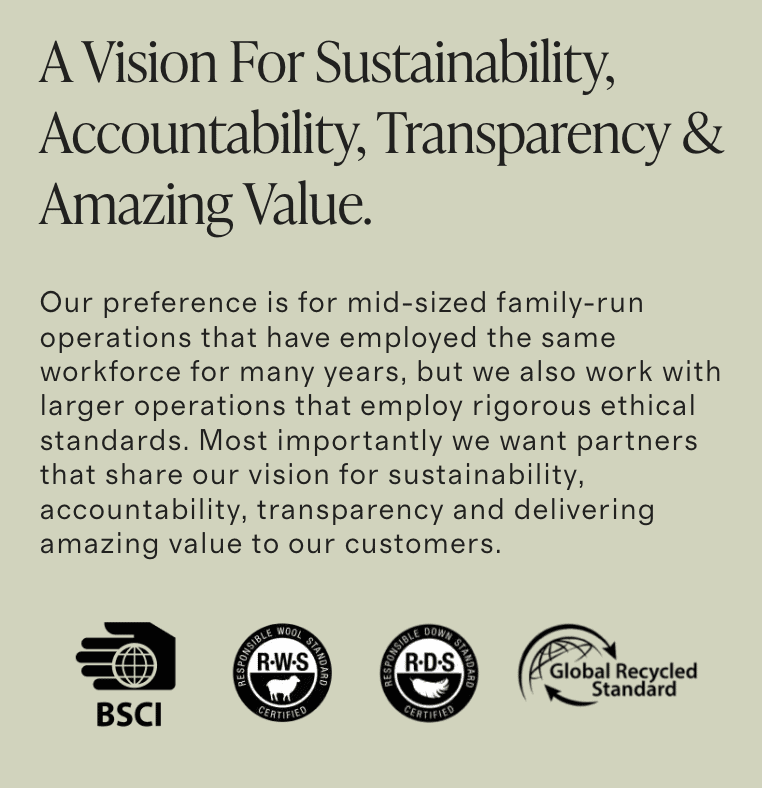
Their leather is Leather Working Group certified, which sets standards for responsible resource and chemical usage. However, keep in mind that leather is sometimes a coproduct of the meat industry and not a byproduct.
The cashmere and alpaca wool does not have any animal welfare certifications. Cashmere is one of its biggest offerings, so this is concerning, especially as cashmere combing is often done with metal combs and can injure the goats. Cashmere farming has also been linked to overgrazing and loss of biodiversity.
Labor
Quince claims to manufacture ethically, but does not share many details beyond that. It has a map of its factories, but it’s not clickable; the factory locations are simply vague dots without any cities.
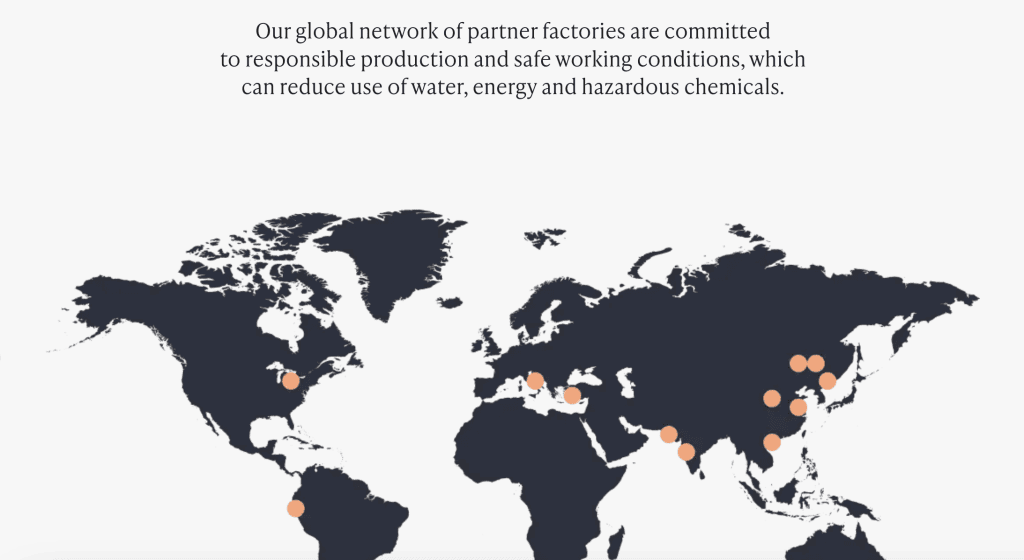
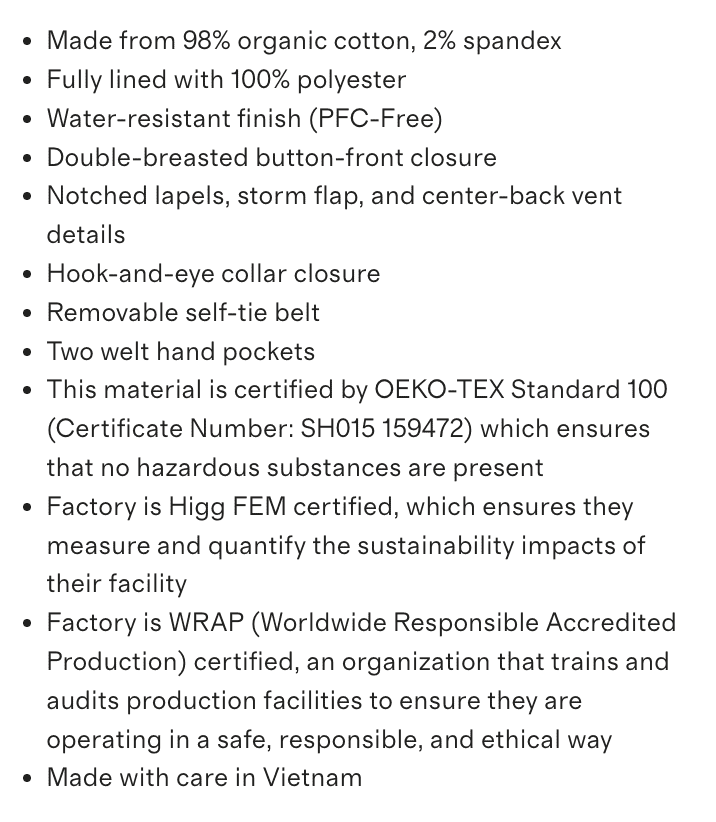
Under each product, it will list the country of the factory and whether it had any additional labor certifications. However, Quince will frame factory audits as ethical certifications. It does this with BSCI (Business Social Compliance Initiative) and Higg FEM. BSCI is not a certification; they themselves say so on their website. It is simply a framework for auditing factories and improving business practices. Similarly, Higg FEM is an environmental assessment and not a certification. Just because you’re auditing your factories doesn’t mean they’re performing well in those audits.

They do, however, have some WRAP-certified products. WRAP (Worldwide Responsible Accredited Production) is actually a certification, and it covers practices such as no forced or child labor, reasonable working hours, safe conditions, and payment of at least minimum wage. This is the bare minimum, but doesn’t necessarily mean workers are getting paid a living wage.
Quality
I have never personally bought from Quince, so I asked on Threads what people’s experience has been. I got pretty mixed reviews. The cashmere sweaters seemed to be good quality minus some pilling. There were several complaints about poor fit and products falling apart quickly. A couple folks noted that their sheets had help up well, however.
Diversity
Quince does use more diverse models in terms of ethnicity. However, most of their clothing is straight-sized, running from XS-XL. They have a very limited collection of items in sizes 1X-3X.
As such a big brand, that’s the one area they could actually do well—provide inclusive sizing—so that’s pretty disappointing.
Is Quince greenwashing?
Let’s be clear: Quince is not among the likes of SHEIN or Forever 21. Many of their products are made with more sustainable materials, and they trace their supply chain.
However, they aren’t nearly as ethical as they claim. Their animal welfare policies are lacking for the amount of cashmere and wool they sell. It’s sketchy how they try to pawn factory audits off as certifications; without those results, we don’t actually know how well the workers are being treated. They also still use virgin synthetics and don’t have inclusive sizing.
Furthermore, when EcoCult covered them in 2023, they sent a cease and desist and demanded that the article be taken down. Extra sketchy.
Because of this, I would say Quince is greenwashing and would not call them a sustainable brand.
Quince Alternatives
The point of these deep dives is not to judge you for shopping where you shop. It’s to simply give you the tools and research to make an informed decision. However, if Quince now no longer lives up to your standards, here are some alternatives.
This section contains affiliate links, meaning I may earn a small commission on any purchases made through these links.
1. Secondhand Quince
Because Quince is so prolific, you can find them on all secondhand platforms and even in thrift stores. Here are my favorite secondhand fashion sites/apps where you can find Quince.
- eBay
- Poshmark (get $10 off your first purchase with my referral link)
- ThredUP (get 40% off your first purchase + free shipping with my referral link)
- Mercari (get $10 off your first purchase with my referral link)
2. Known Supply
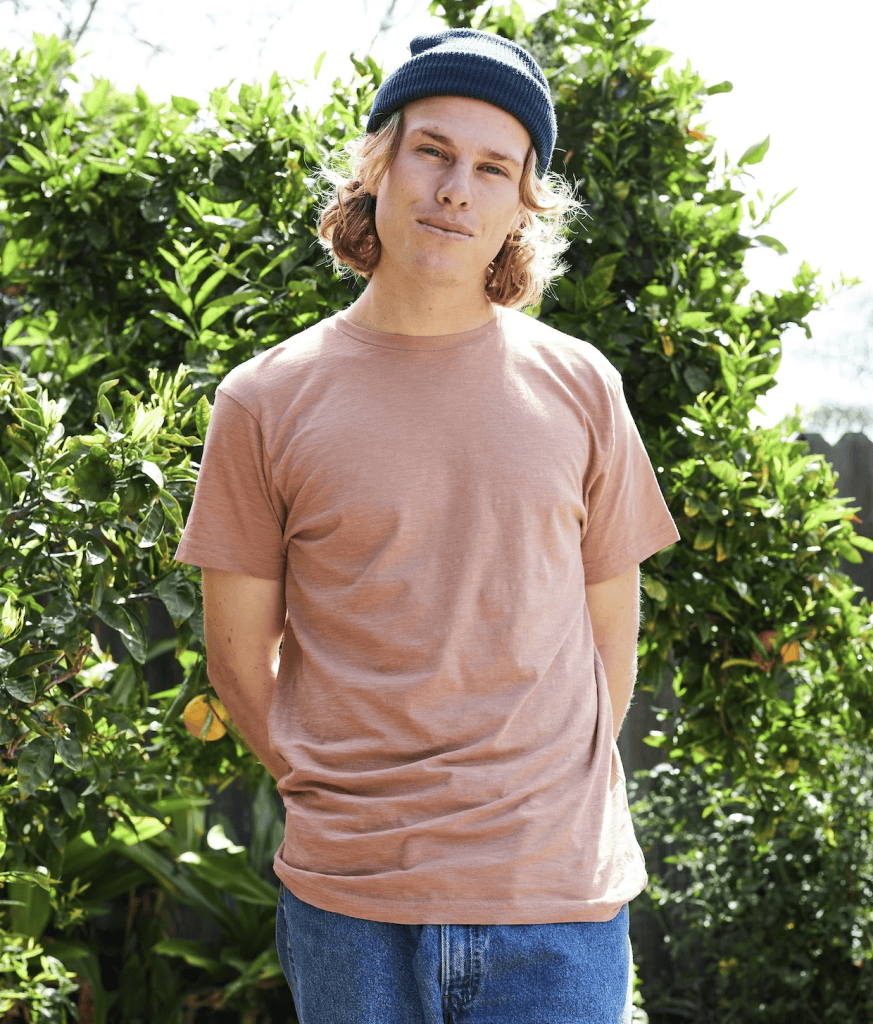

Known Supply offers comfortable and stylish basics made from GOTS-certified cotton in Fair Trade factories. They have both men’s and women’s styles.
3. Kotn

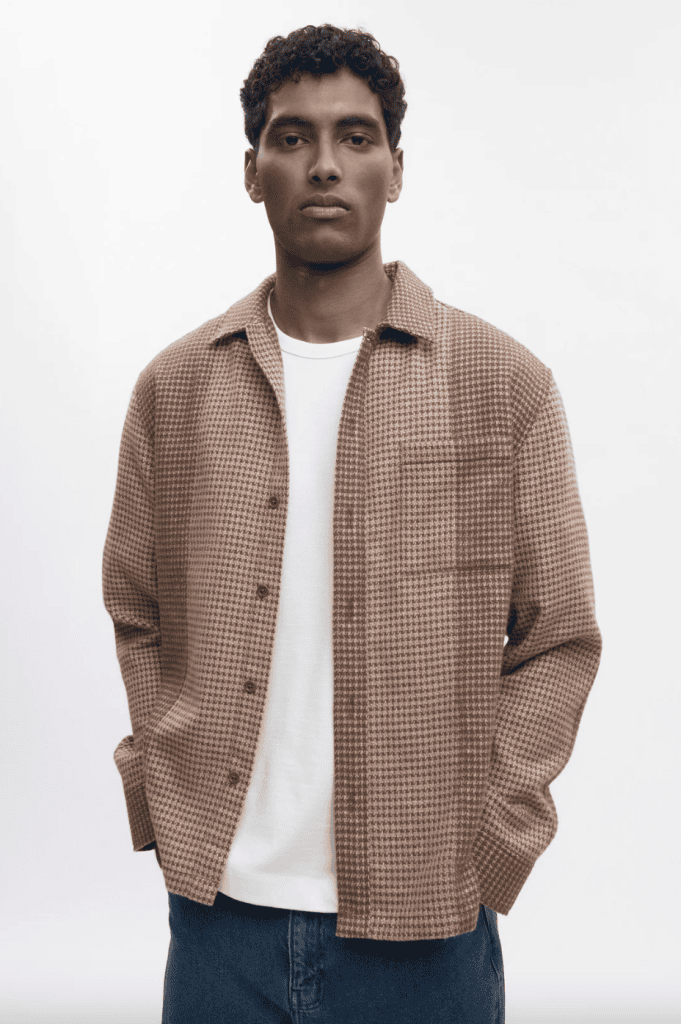
Kotn is a Canadian brand that reinvests in the Egyptian cotton farming community where they source their cotton, funding schools and prioritizing female education. Their styles range from sweats to polished blazers.
I personally own a sweat set from them and it’s my absolute favorite.
4. LA Relaxed


LA Relaxed makes breezy, versatile pieces from organic and natural materials. All their products are designed and made in their own factory in LA, where workers are paid a living wage.
Let us know if you’ve tried Quince and what your experience has been like with them!