Acatenango Volcano Hike Packing List (Backpack Only + Light)
Packing for the Acatenango Volcano hike is tricky since the climate is so different from the rest of Guatemala. And, if you’re backpacking, you’ll have to fit your hot weather and cold weather items in a small space. Here’s what I’d recommend bringing after doing this overnight hike in November 2025.
This post contains affiliate links, meaning I may make a small commission on any purchases through those links.
FAQs about packing for Acatenango
Can I leave my suitcase in a safe spot doing the hike?
It depends on your tour operator, but most will offer this for free. I went with V-Hiking and there was a storage room.
Can I rent gear?
Most tour operators let you rent hiking backpacks, poles, boots, and fleeces. I would recommend bringing your own backpack and boots though, as you can’t guarantee availability of your size.
Is there trash disposal?
Kind of. At the second park entry, there was a place to dispose of trash, but they just burn it, so plan to carry out everything you bring.
Is it warm at the beginning of the hike?
It’s definitely warmer, but still cool enough for a long sleeve and pants, especially since the beginning of the hike is in the forest. I thought I might need a t-shirt and shorts, but I didn’t in November.
Check out my guide to hiking Acatenango for more details about the actual experience. This post is focused on packing!
Essential items for hiking Acatenango
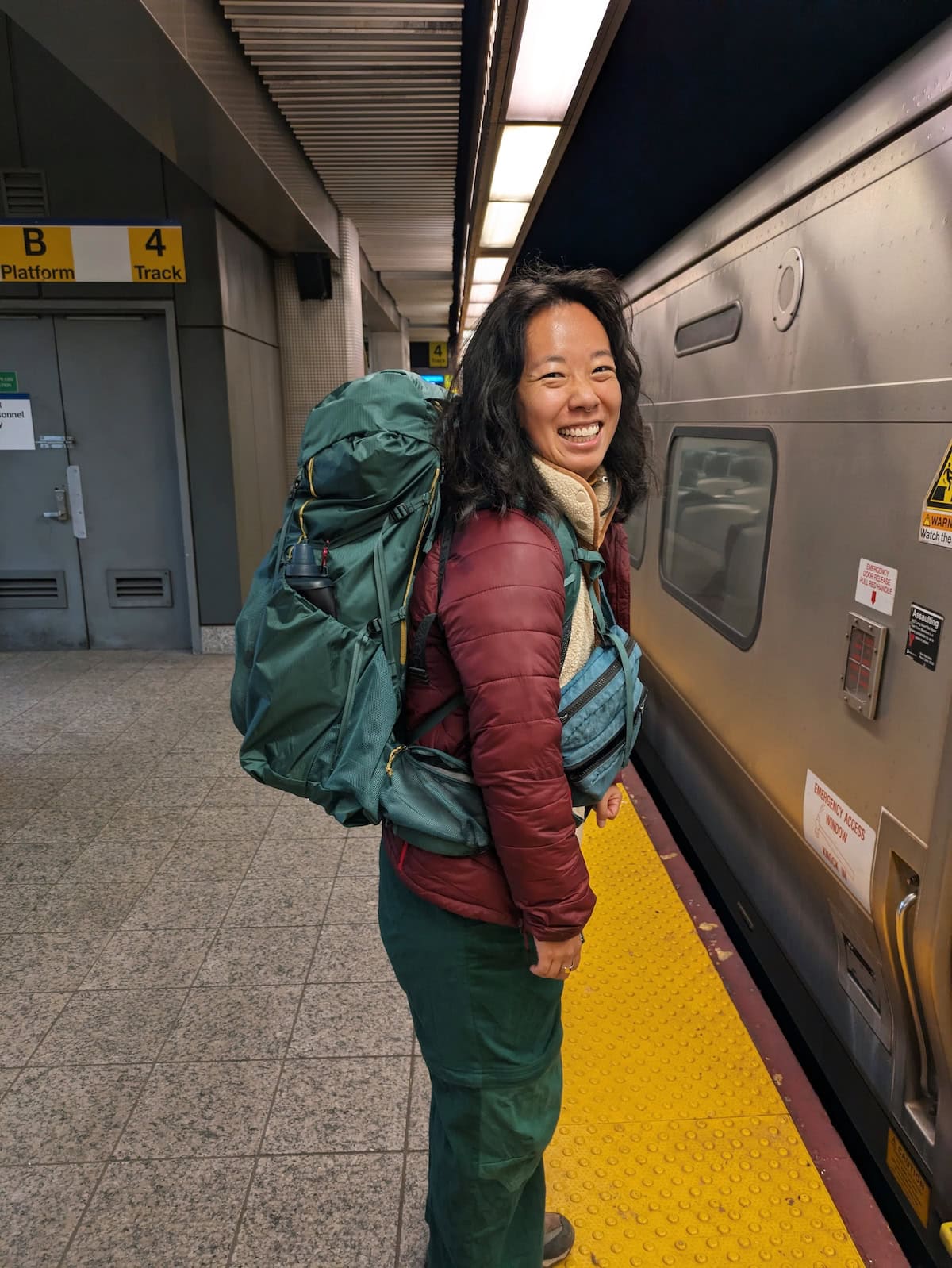
Hiking backpack—I brought the REI Flash 55 Pack for the entire trip, and left a tote bag of non-hiking items in the tour group’s storage. You definitely don’t need a 55L backpack for the hike (40L should be plenty), but I wanted it for the rest of my trip.
Hiking boots—To reduce the number of shoes you need for the trip, I’d recommend a hybrid boot like the Moab Speed 2. My friend took these and wore them outside of the hike too. If you want to do the optional hikes to Fuego or Acatenango summit, you definitely need sturdy shoes due to the loose volcanic rock. I would not recommend wearing normal tennis shoes even if you plan to stay at base camp, but you could probably get away with trail runners.
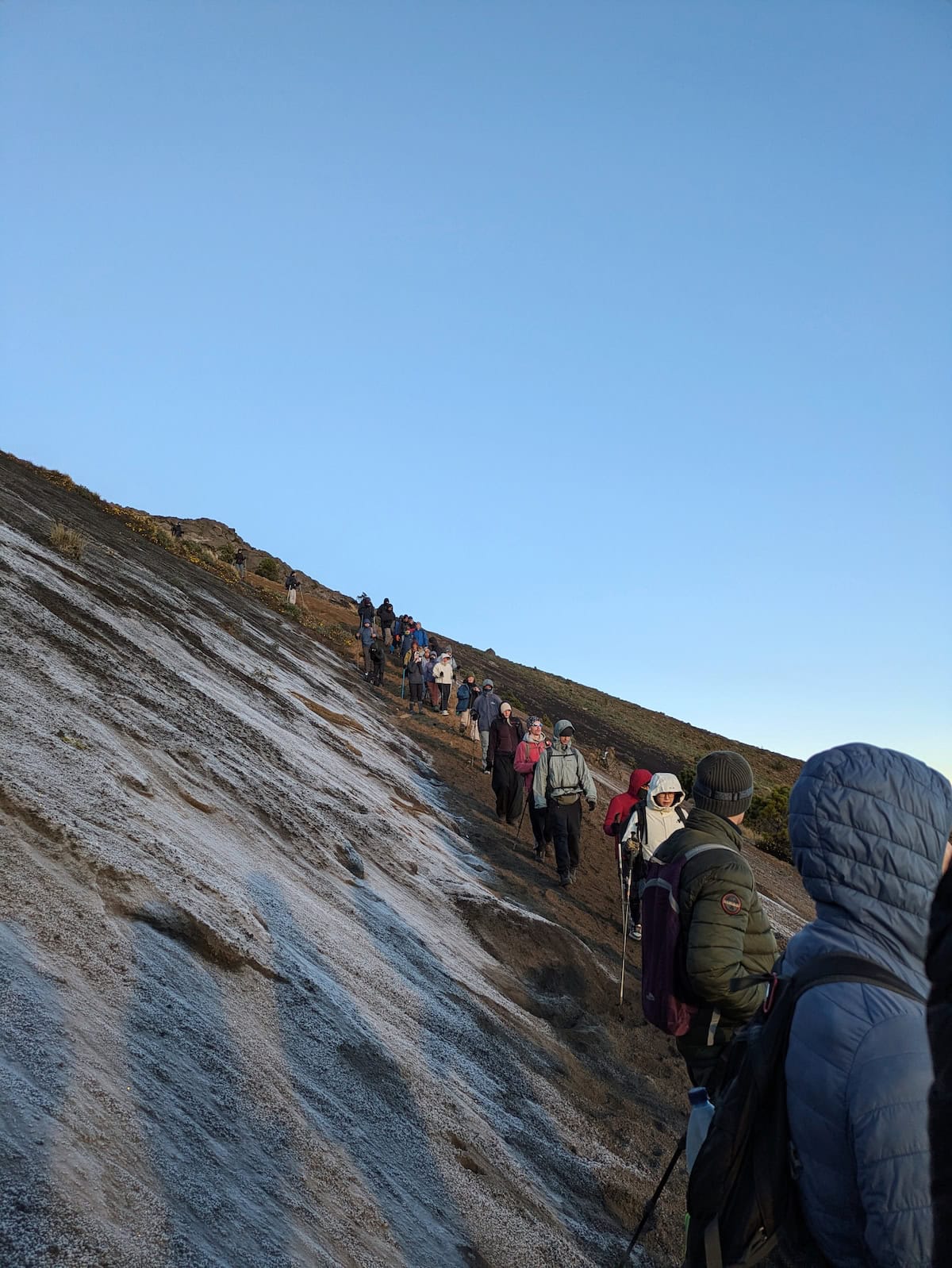
Two bottom layers (leggings and joggers to go over)—You’ll want one layer going up; some people wear shorts but it starts getting chilly pretty quickly. I would start with joggers and layer in the leggings once at base camp.
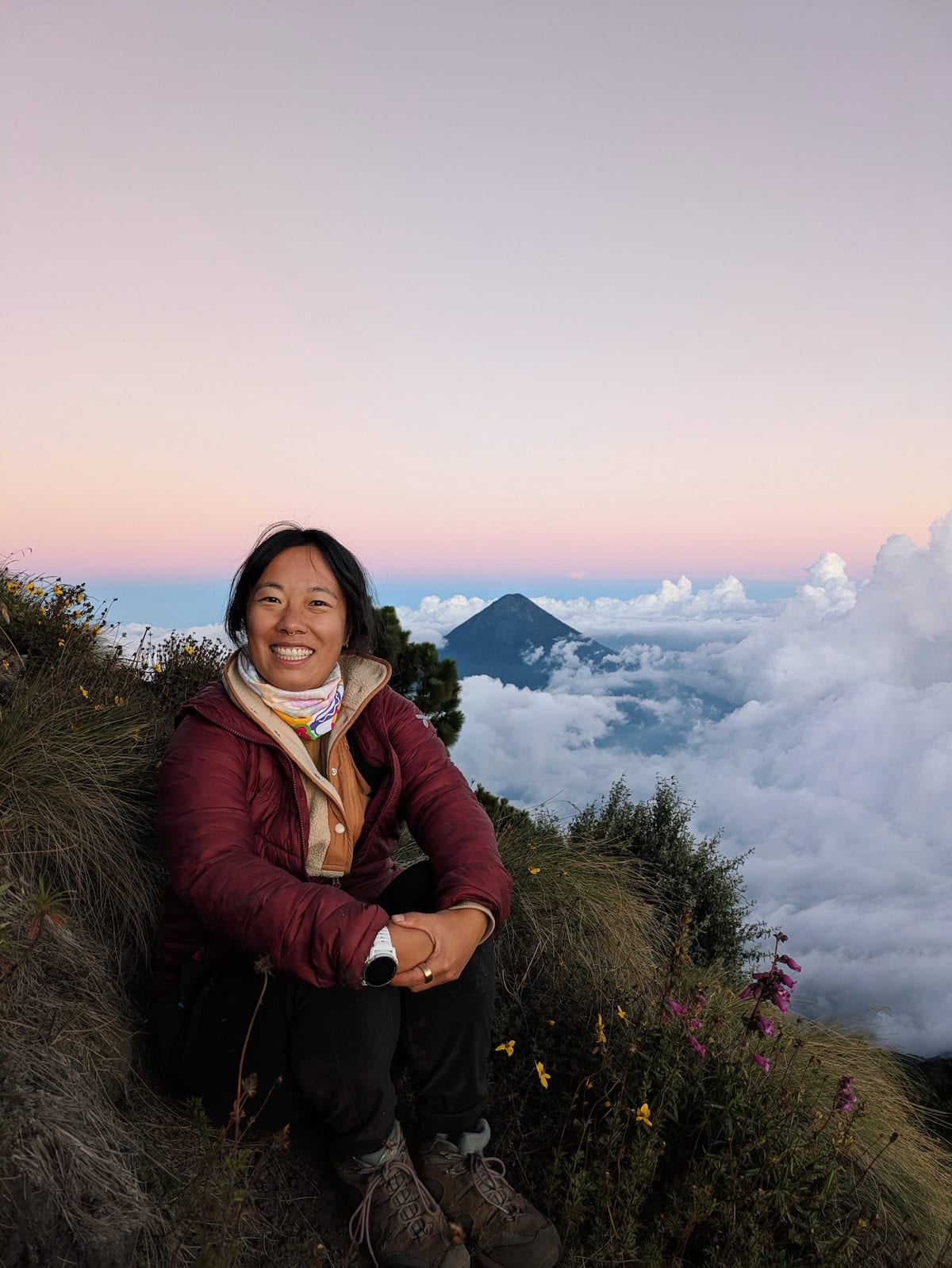
Base layer—A tech or merino wool layer is perfect for keeping the cold out. Bonus if it has a turtleneck. Some people wear a t-shirt at the start, but I found that a long sleeve was perfect in November.
Fleece—You’ll need this to keep warm once at base camp. These are easy to borrow or find secondhand if you don’t already have one.
Packable puffer—It gets COLD at night. You want at least 2 jacket layers (including the fleece). I wore an old puffer I had and it was fine, but if you need a rec, Patagonia or Cotopaxi have quality ones.
Rain jacket—We didn’t need it in the end, but always good to be safe. This packable rain jacket is what I brought.
Gloves—Make sure they’re quality and insulated. I just had thin running gloves and wish I’d had thicker ones. These are the tech gloves I got for NYC winters.
Hat or earmuff headband—Even if you have a hood, you’ll want the extra warmth for your head and ears.
Buff/gaiter/scarf—To cover your nose and mouth for when it gets freezing at night.
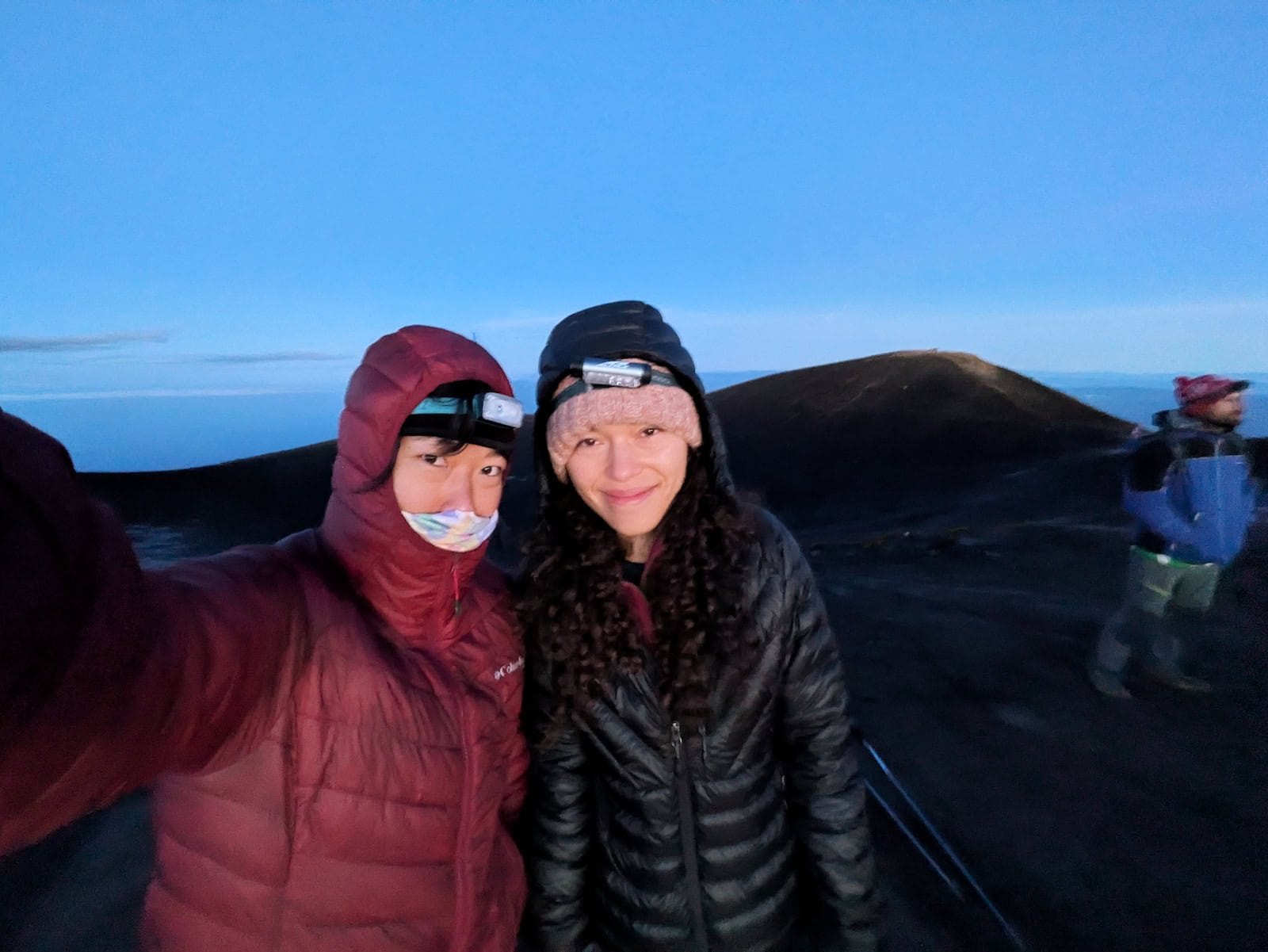
Undergarments (sports bra, underwear, socks)—I brought a change of these, but didn’t change at base camp. It’s still probably best to have an extra pair of underwear and socks though. I needed the extra socks at night since it got so cold. I highly recommend Darn Tough merino wool socks for hiking, and they have lifetime warranty.
Toiletries (toothbrush, toothpaste, floss, sunscreen, toilet paper, hand sanitizer)—While our base camp had toilet paper and hand sanitizer, it’s not guaranteed, and it might run out. Also, since you’re at altitude, the sun is strong, so be sure to protect your skin.
Medication—Remember your prescriptions and any first-aid meds you might need like ibuprofen, Neosporin, TUMS, etc.
3L of water per person—There is no running water at base camp, and no streams along the way to filter water. Our tour group recommended 3L per person. We bought 1L bottles so they were easier to pour.
Cash for park entry and gear rental—Your tour group will tell you what you need. It could be anywhere from 200-500 quetzales depending on if you rent gear or do an optional hike. If you need a borderless account, I recommend Wise, or Charles Schwab for an account that reimburses ATM fees.
Strongly recommended items
Hiking poles (rent from your tour operator)—The hike is steep, and these make a big difference in going up and down. You can usually get them for around 25 quetzales from your tour group. I have my own but didn’t bring them since you have to check your bag on the flight.
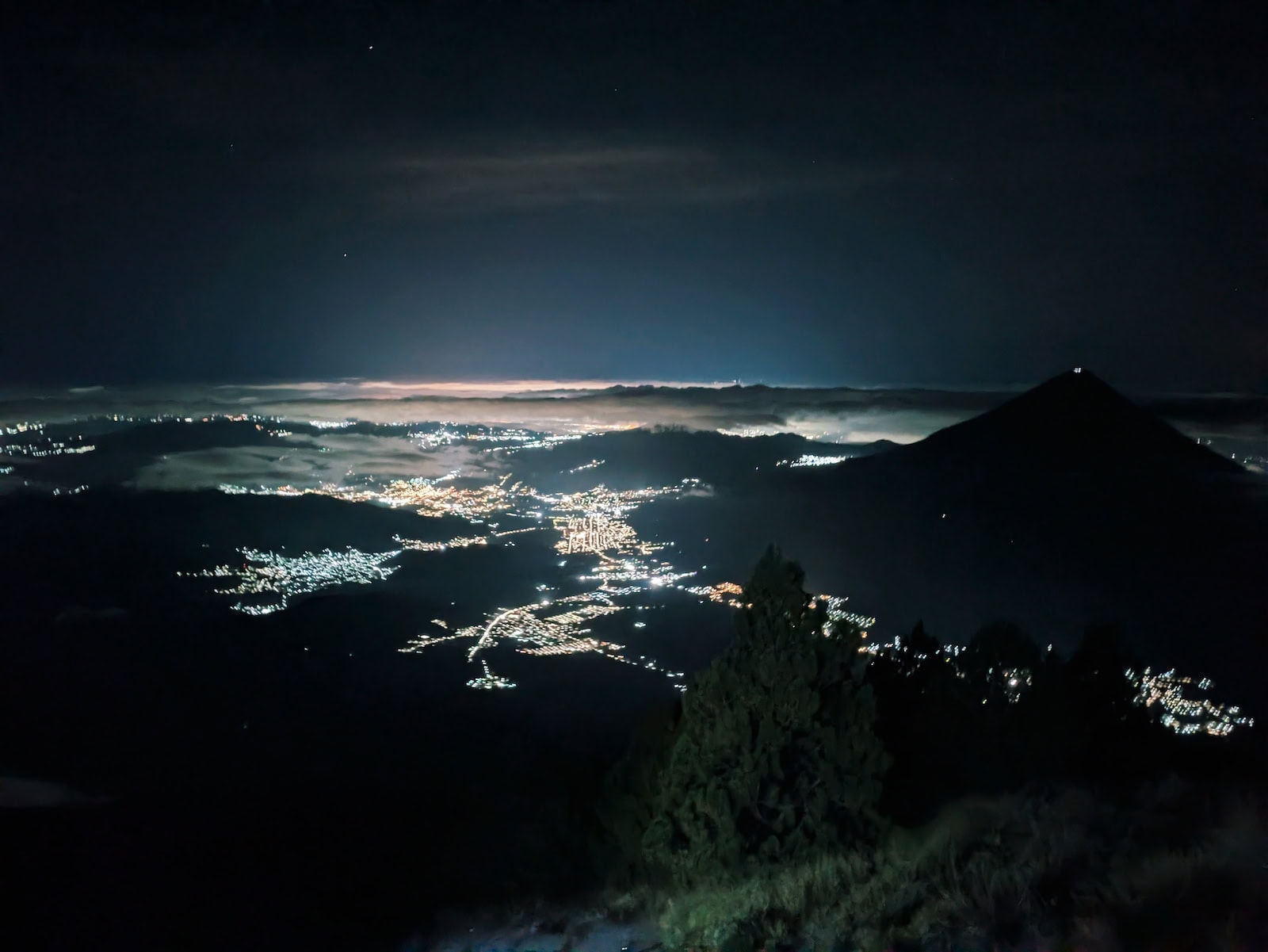
Headlamp (can sometimes borrow from tour operator)—If you’re doing either of the optional hikes, this is a necessity as they both have portions in the dark. You could probably get away with your phone flashlight if you stay at base camp, but a headlamp will make life a lot easier when shuffling through your bag, going to the bathroom, etc.
Snacks (especially if you have dietary restrictions)—I had issues with the meals, so I would strongly recommend bringing high-protein snacks and dried fruits. You may want to bring any protein snacks home as the grocery stores don’t have a lot of good protein bars or vegan jerky type snacks.
Hand warmers—My friend brought these and they were a lifesaver at night.
Sunglasses—It’s pretty shaded on the trail up, but it’s very sunny at base camp.
Shoe gaiters—I had hiking boots full of rocks on the way down from Acatenango Summit. It’s not necessary to have these if you don’t mind stopping to empty out your shoes a couple times, but they could help if you already own some.
Let me know if you have any questions, and happy trails!